REAL PROJECT · DESIGN SYSTEM, ACCESSIBILITY AND CODE
The bio link was rented. The audience was ours — and the data, nobody’s.
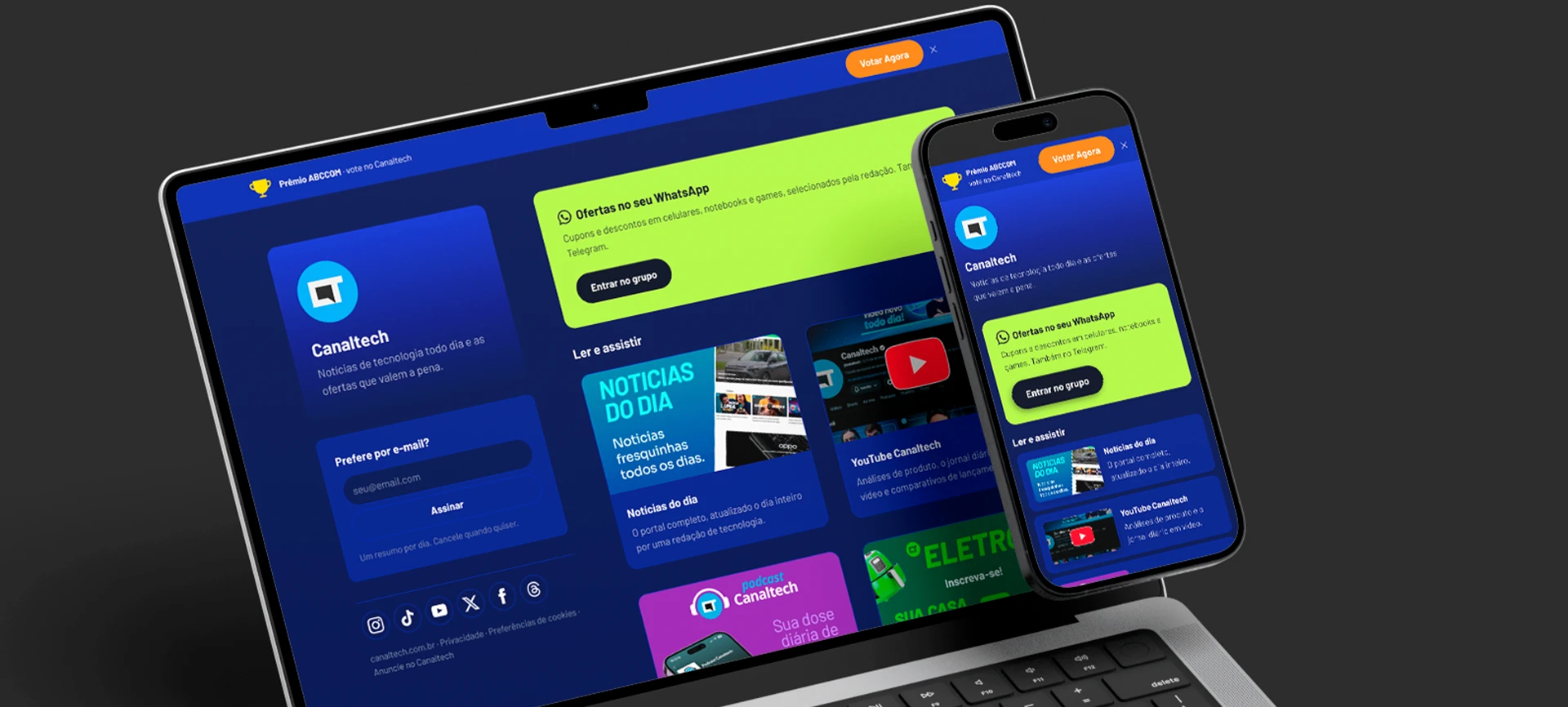
Canaltech distributed eight destinations through a Linktree. It worked as an index and failed as a product: no brand, no states, no consent and not a single click event coming back home. I rebuilt it as an owned page — design system, accessibility, telemetry and a single HTML file the team publishes with no build.
About the numbers.
The page is finished and tested, not published. Everything measured here is about the build — tokens, components, states, test coverage and weight. There’s no traffic or conversion data, and section 06 says so instead of estimating.
CLIENT
Canaltech
owned link hub
ROLE
Design system
and design engineer
DELIVERABLES
Design system · UI
Single HTML · accessibility
MADE WITH
Claude Code ⇄ Figma via MCP
HTML, CSS and JS · Playwright
PERIOD
2026 · solo
3rd generation of the page
01 · THE PROBLEM
The page existed. Owning it didn’t.
The bio sends the audience to a Linktree: good as an index, incapable as a product. Eight destinations with the same weight, and the click stayed outside.
3
generations of the same page; the first two rented
8
destinations competing at the same visual weight
0
click events in the house’s own analytics
0
control over consent, brand and states
02 · BEFORE AND AFTER
The change wasn’t about layout. It was about ownership.
The same goal — from the bio to eight destinations — down both paths. What shows up in the middle is everything the rented page couldn’t do from the inside.
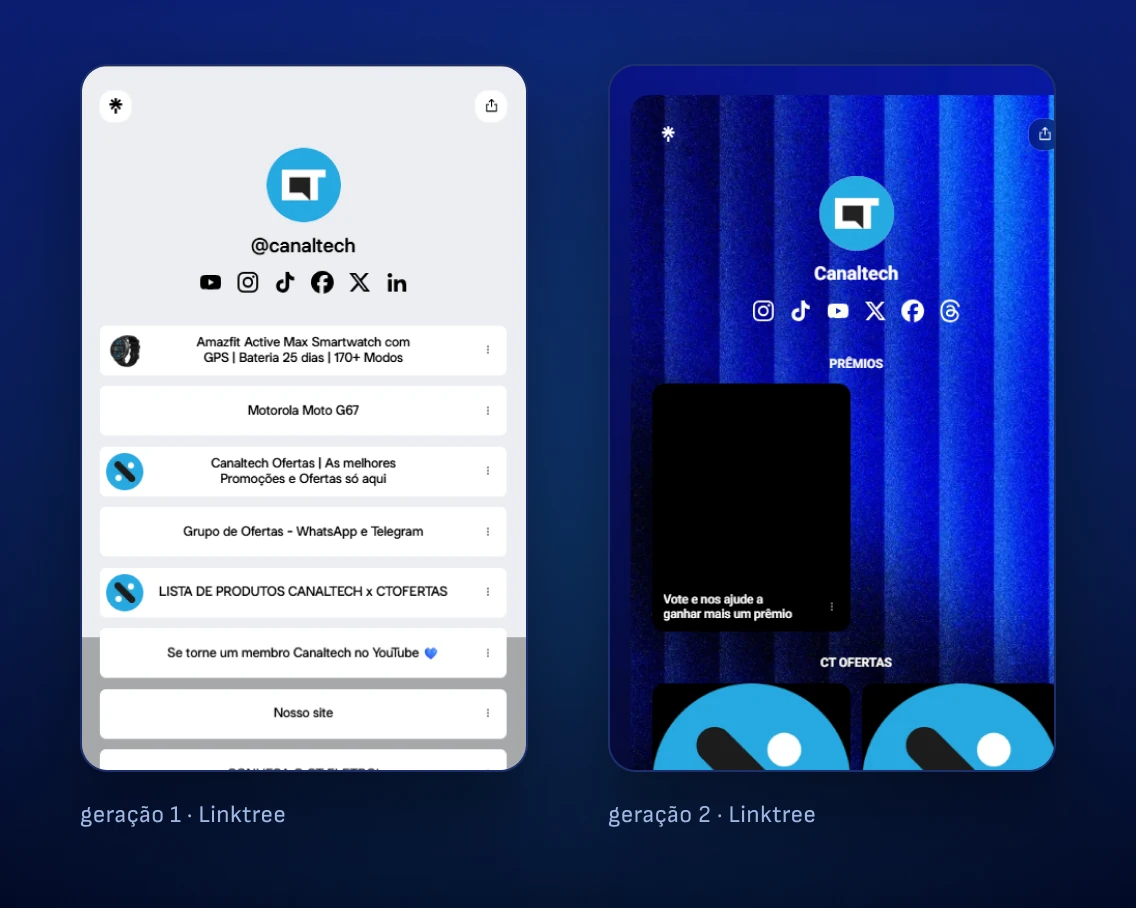
BEFORE
A list hosted by a third party, eight destinations with the same weight and the brand reduced to a round avatar. No campaign banner, no focus state, no keyboard path. Consent and click data stayed with the platform, and any change depended on another company’s dashboard.
None of those last four can be solved from inside the tool. That’s the cost of renting.
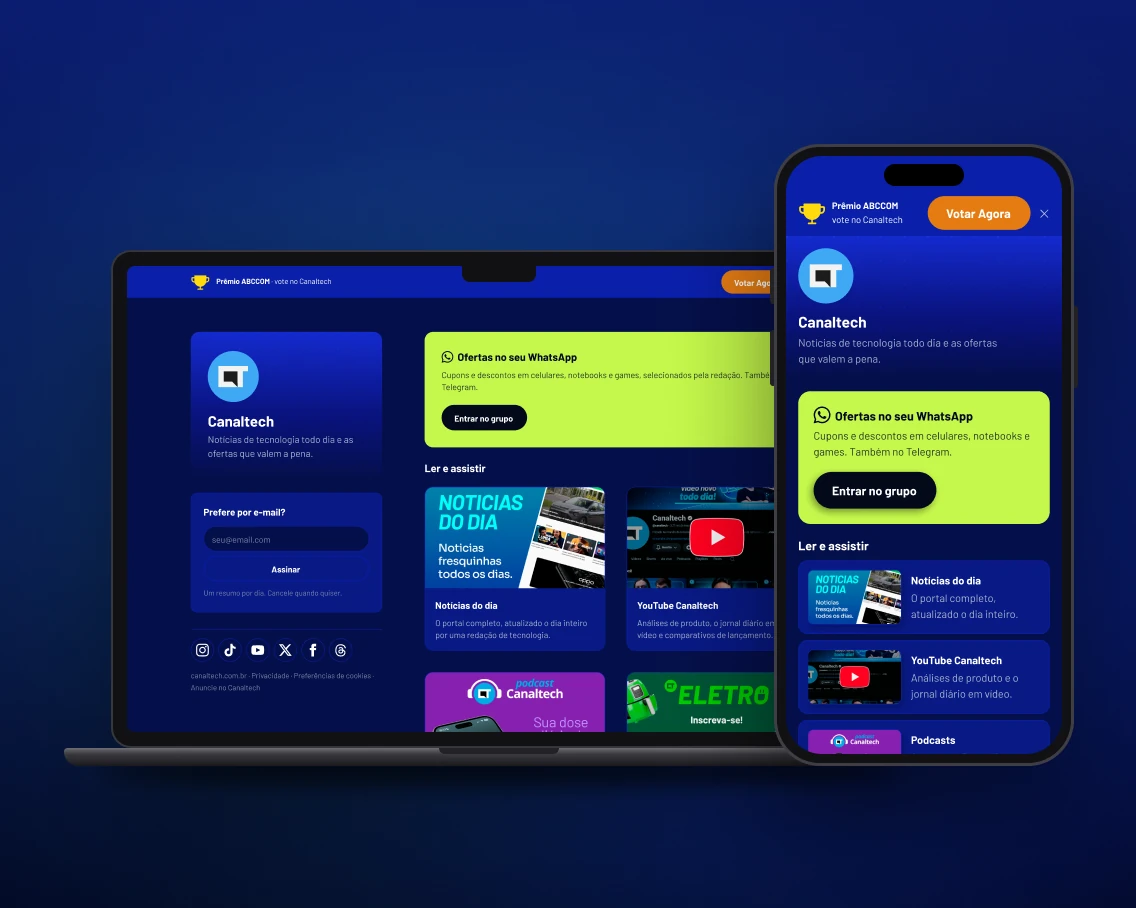
AFTER
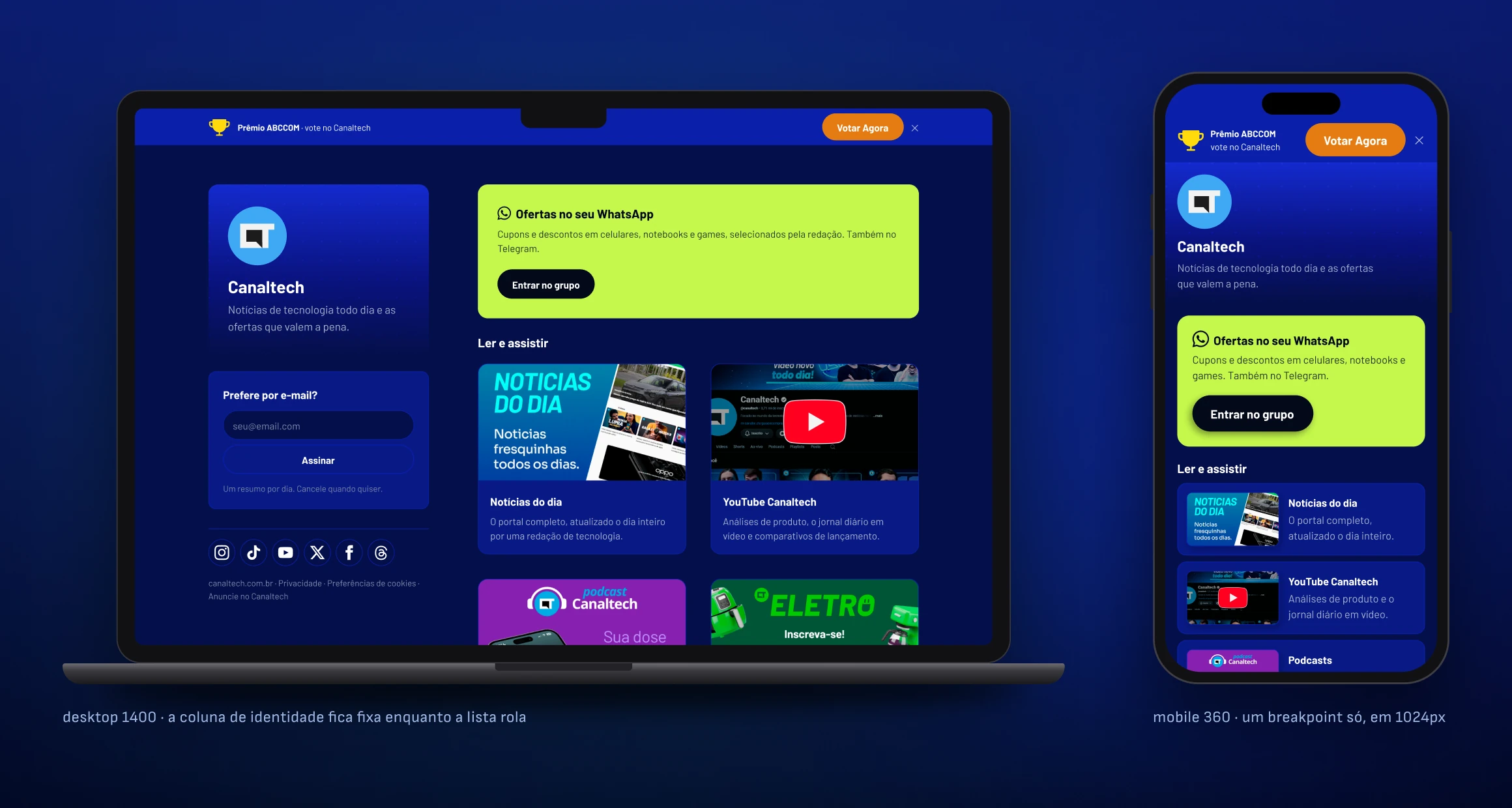
A Canaltech page, with a brand field at the top and real hierarchy: campaign banner, CTA, sections and eight destinations with different weights. Clicks, newsletter and consent become events in the house’s analytics.
It’s one file. It goes up on Canaltech’s domain with no build, responds to hover, press, focus and keyboard, and degrades on its own if an asset is missing.
03 · CONSTRAINTS
The rules that existed before the first pixel.
It wasn’t a blank-canvas project. What could be done was already bounded by who publishes, where they publish and how much it costs to maintain after I leave.
Publishing
The dev team publishes, it doesn’t build. No build, no bundler, no dependencies: it arrives as a finished file.
Hosting
No application server. It has to work as a static file anywhere Canaltech already uses.
Performance
Traffic comes from the bio, on mobile, often on a poor connection. No third-party requests — fonts included.
Privacy
Consent is a requirement, not decoration. The page measures clicks, so it asks first and stores the answer.
Resilience
If an asset is missing from the deploy, the row can’t break. Every icon and image has a plan B in the HTML itself.
Campaign
The event banner comes and goes without touching the layout, because the vote has an end date.
04 · PRODUCT DECISIONS
Four decisions the static frame didn’t answer.
Figma delivers the page standing still. Product happens in what it doesn’t draw: what the button does with no destination, what the page does if the file disappears.
01
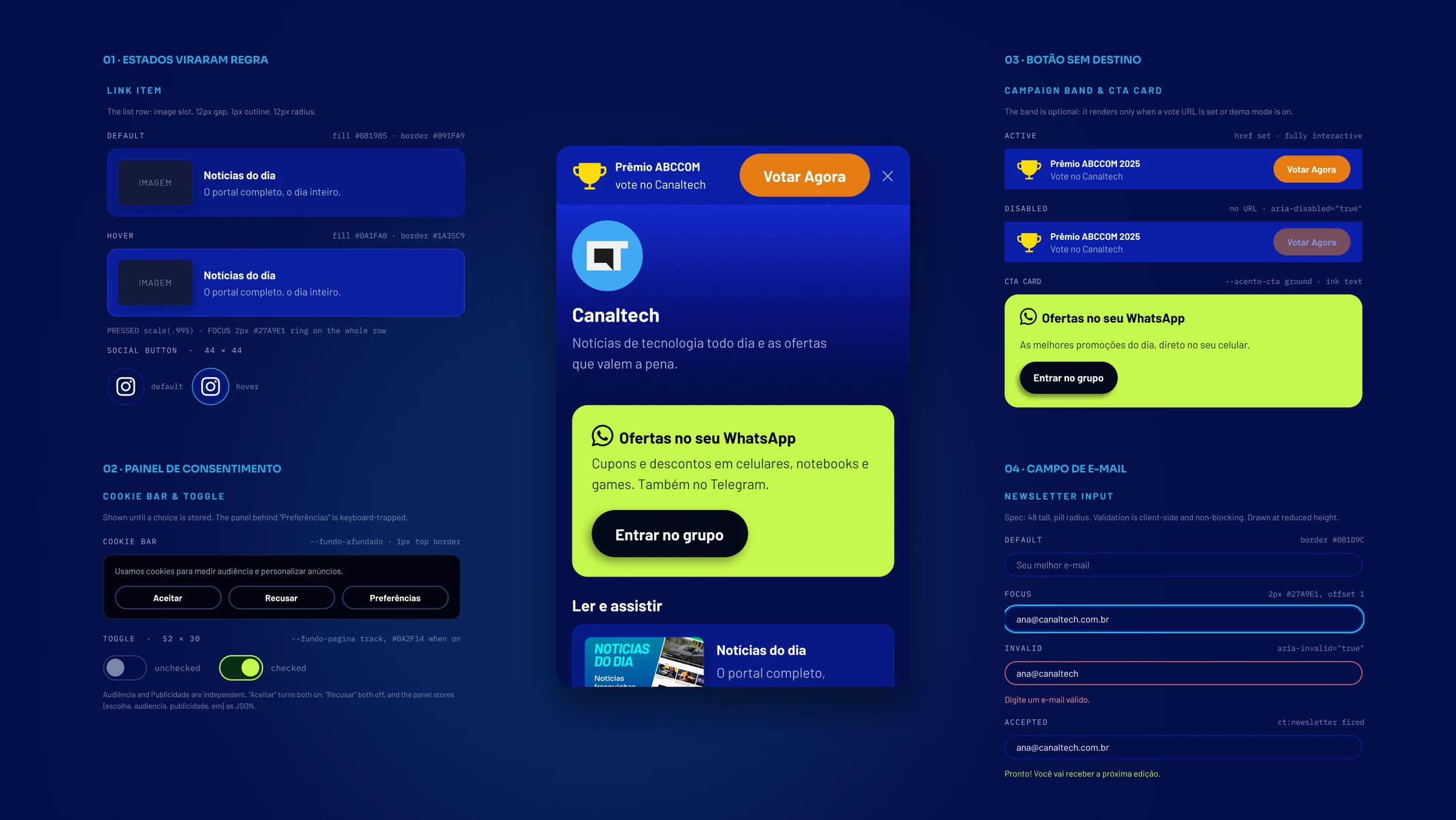
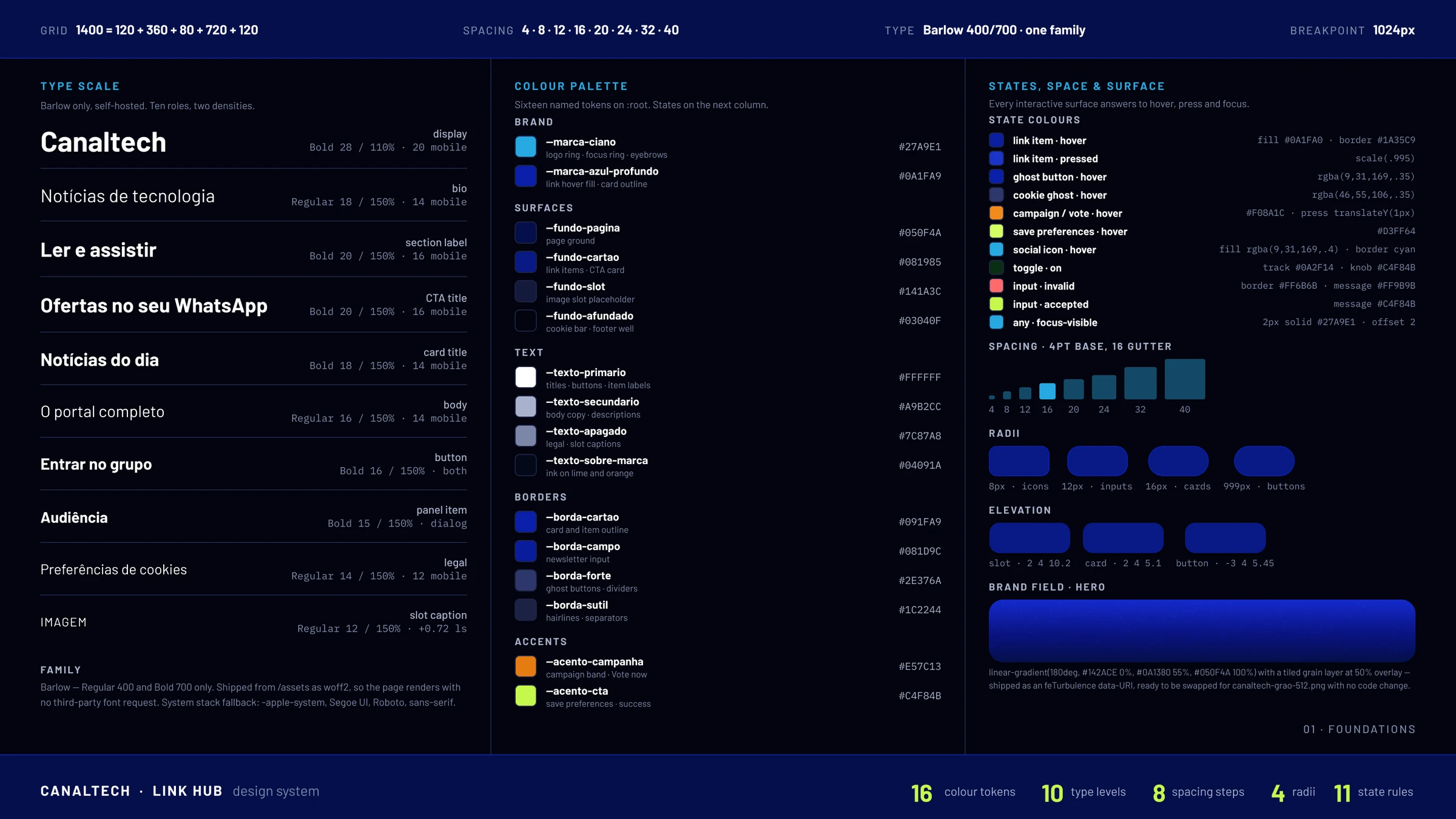
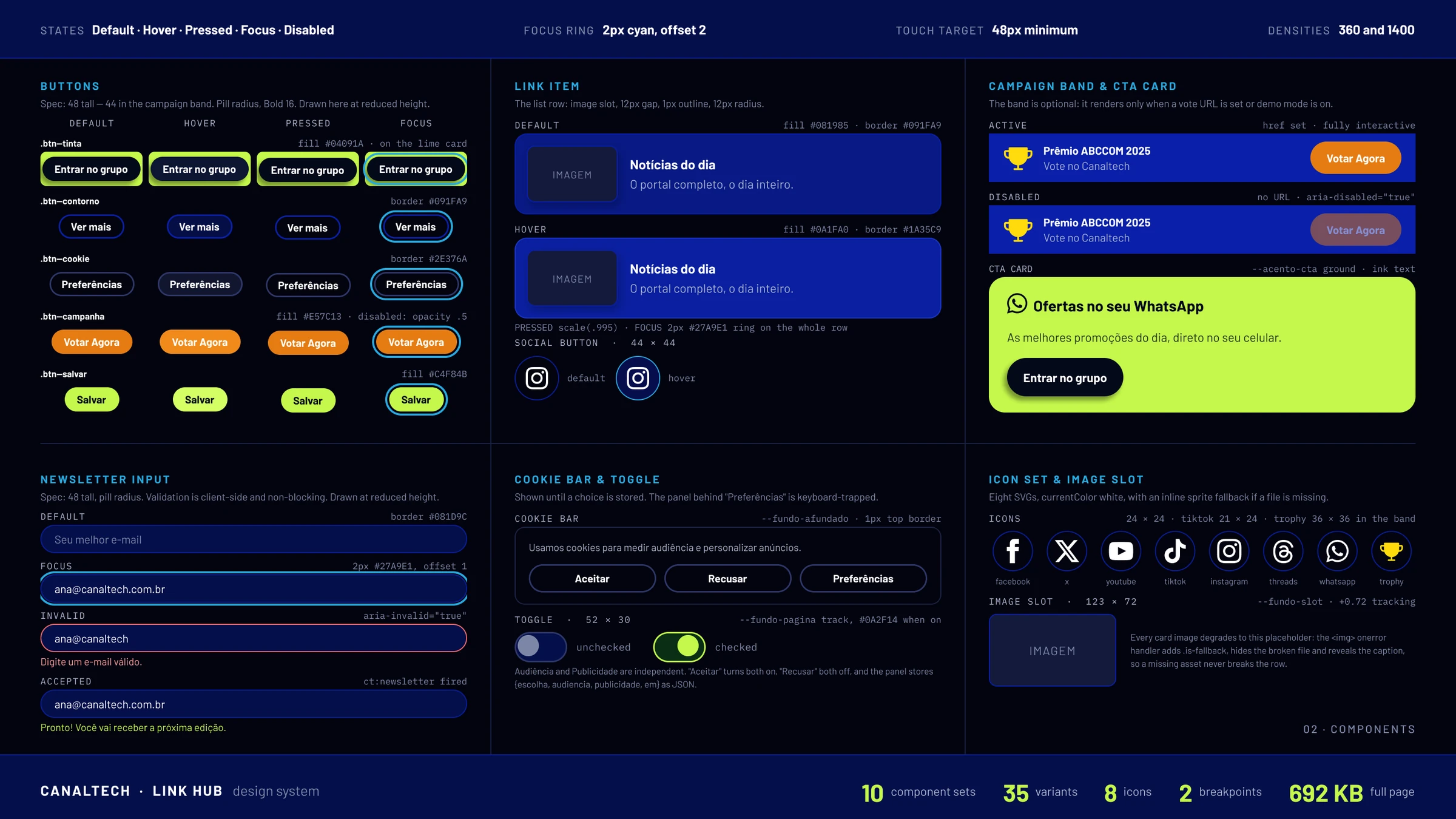
States became rules. Eleven rules derived from the tokens themselves — hover, press, focus, invalid, accepted and the toggle on.
02
The consent panel was built from scratch. Figma only had the button; I built the modal dialog, the focus trap, ESC and the scroll lock.
03
With no destination, the button declares itself disabled. It loses the href, becomes aria-disabled and stops responding, instead of becoming a dead anchor.
04
The hero grain shipped as code. Reproduced in CSS with feTurbulence — no file and no third-party request.
05 · SYSTEM AND DELIVERY
Ten components, 35 variants, and no hover left to invent.
The system isn’t a pretty palette: it’s the contract that lets the next person get the state right without asking. A variable in Figma is a custom property in CSS.
16
color tokens, with the same name in Figma and CSS
11
state rules specified, not improvised
10
component sets · 35 variants
176
automated assertions in Playwright
One file. Zero dependencies. Zero build.
The team gets a 55 KB index.html and an assets folder. It opens in the browser, goes up on any static host, has nothing to install — because whoever publishes isn’t whoever builds. The font comes from the repository itself: no request goes out to a third party. Every <img> has an onerror that swaps it for the inline sprite and keeps the row standing.
The system goes back to Figma.
The frame was read through MCP — nodes, variables, typography, grid and assets, nothing described from memory. What came out of the code went back as two 16:9 boards in this same file. In a one-way flow, Figma dies at handoff and becomes an image that goes stale at the first tweak; closing the loop, the file’s system and the HTML’s are the same.
06 · MEASUREMENT AND HONESTY
The page started answering questions nobody could ask before.
Three events go from the page into Canaltech’s own analytics. It isn’t a vanity dashboard: it’s knowing which destination pays for the next story.
ct:link
id · href · label
Which destination the audience actually uses, by position in the list and by live campaign.
ct:newsletter
How much of the audience coming from social becomes an owned base, with no middleman.
ct:cookies-consentimento
choice · audience · advertising · date
What share of the base accepts measurement — and what can honestly be attributed.
What isn’t here.
No traffic, click or conversion numbers — the page is finished and tested, not published. Once it goes live, the three events above start feeding exactly these columns, and then the case gets a results section that today would be a guess. Two things were consciously left open: without production data, the hierarchy of the eight destinations is a hypothesis, to be revisited in the first month; and there was no test with a real screen reader — only checks of focus, labels, keyboard order and contrast.
07 · MORE
Other projects
ThumbDrop
An internal tool that took thumbnails out of the design team’s queue. Two versions tested with six people each, AI inside the editor, and the cost per thumbnail visible before every click.
Nega Nagô
A braider’s catalog became booking without leaving WhatsApp. Research, design system and front-end — live at neganago.com, with availability coming straight from her calendar.
Available for work
I design, I write the code, and I tell you what didn’t work.
Thirteen years in design, five of them at Canaltech across design systems, marketing and sales. If you have a surface that needs to ship finished and measured, not just specified, get in touch.
© 2026 Erick Teixeira
oerickteixeira@gmail.com · São Paulo